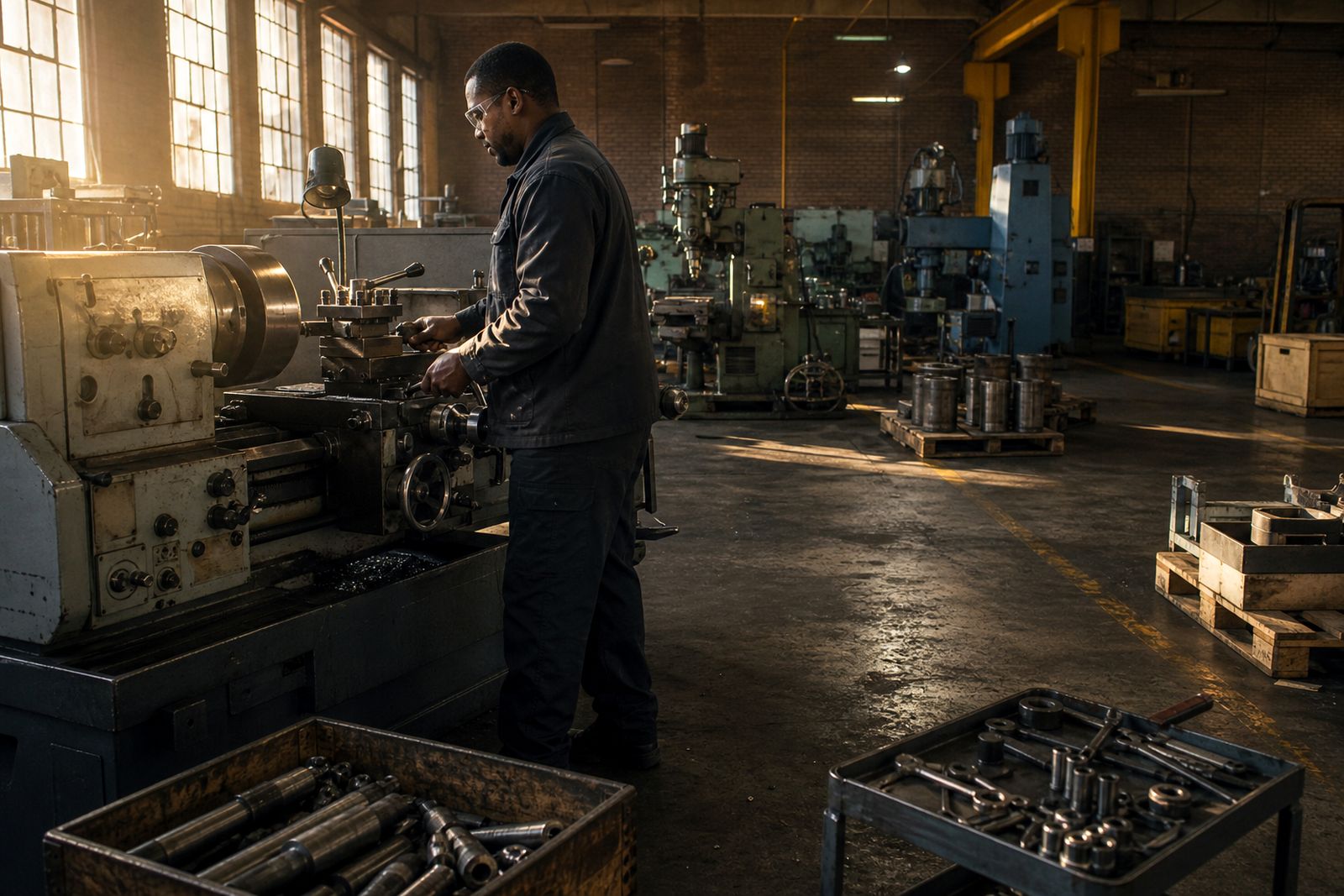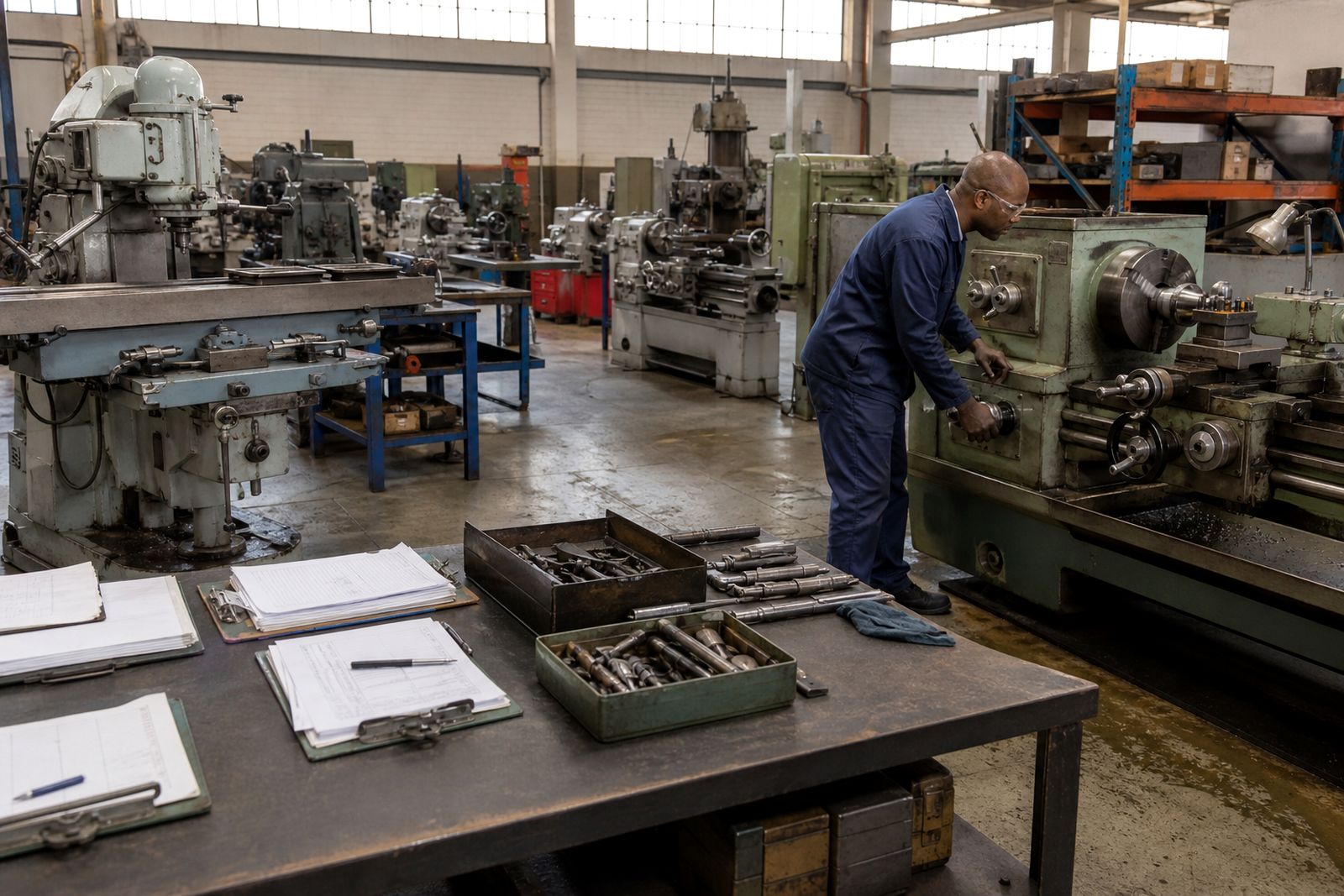

Operator notes
Written operator notes record the checks your workshop wants followed before an operator starts a new machine. Each note covers one machine and the order its checks are made in.
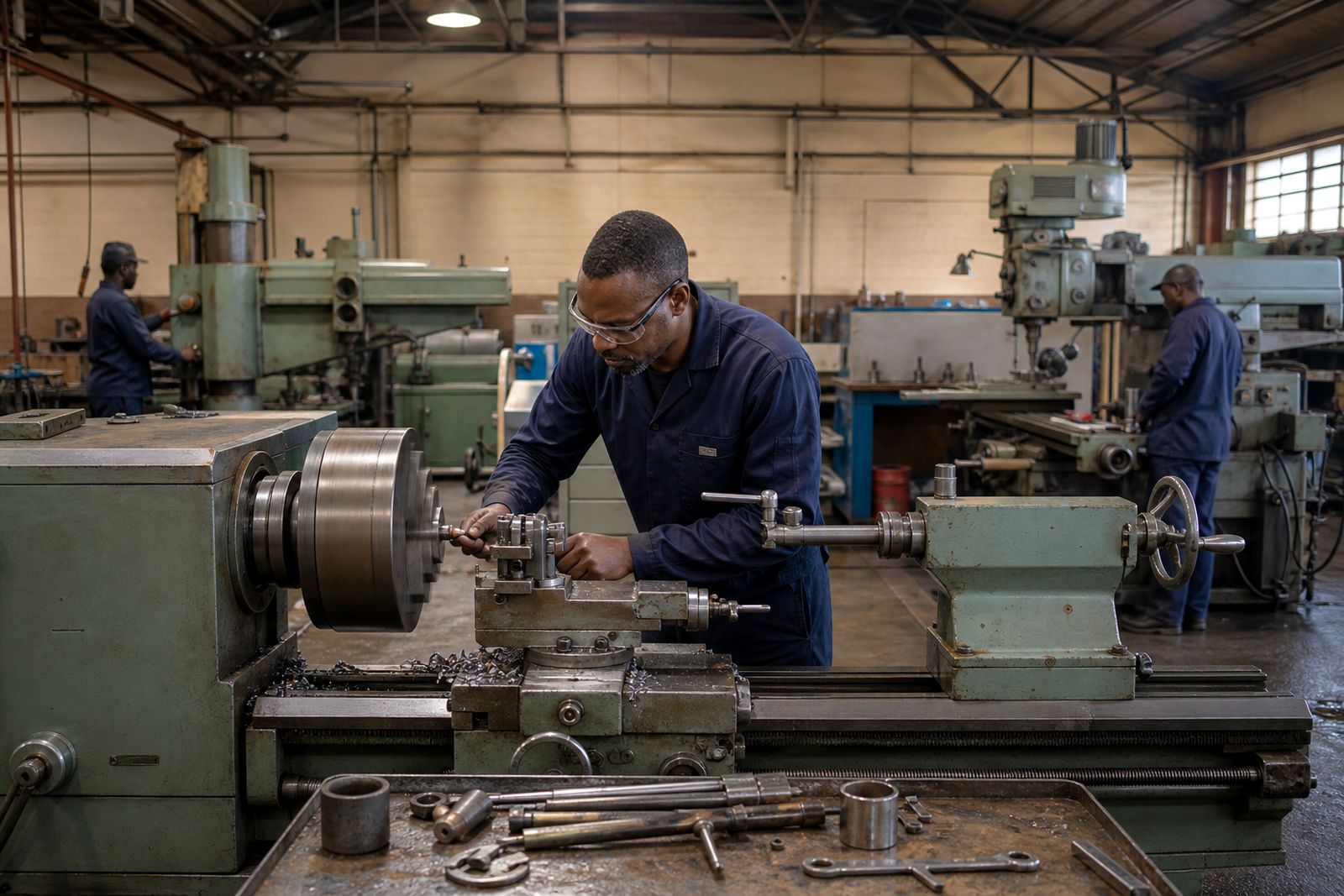
Floor naming comes first
Exact wording for the machine, fitted accessories and control positions must match the workshop floor.
Clear naming reduces confusion between similar lathes, mills, grinders or presses in the same workshop.
Start-up order, lubrication points, guard checks and shutdown order belong in the sequence your operator must follow.
Set daily checks
Daily notes should separate safety checks from production settings, because each one is signed off for a different reason.
The check line for a chuck, vice, wheel, table or ram must state the accepted condition in writing.
Loose wording leaves the operator to decide what counts as ready, clean or safe before cutting begins.
Job and machine fields keep each note tied to one setup:
- Exact machine name and workshop position written on the note.
- First material, tool or wheel named for the opening task.
- Daily lubrication point recorded with the product name used in the workshop.
- Sign-off person responsible for the completed check.
Record setting limits
Job settings need written limits for speed ranges, feed choices, pressure settings or stroke settings used by your job.
Do not copy a setting from another machine unless the same tooling, workholding and material are named.
A boring mill, surface grinder or hydraulic press can be damaged by a note that omits clamping, travel or pressure limits.
Missing manuals, guard references or consumables can be named in a request for spares or written machine information from head office.
Keep revisions controlled
Revision dates show which operator note was current after a tooling change, accessory change or repeat mistake.
Store removed notes away from the control area so an operator cannot follow an outdated start-up step.
Written corrections give supervisors a traceable way to update operator instructions without relying on memory.
What our machine customers say
Verified Google reviews